I manage procurement for a 200-person creative agency. We do about $150K annually across 40 vendors. One of my oddest recurring headaches? The office ping pong table. It seems simple—buy a table, buy some paddles, everyone's happy. But getting that wrong cost me my reputation with the team for about three months, and cost the company a good chunk of change. This is what I learned about why Stiga ping pong paddles (and the right ones, specifically) finally solved the problem.
The Surface Problem: Why Are Our Stiga Paddles So Bad?
It started when the CEO decided we needed a ping pong table to boost morale. Great. I bought a mid-range Stiga table (the Pro 25, if you're curious—figured I'd go with a trusted name). Then I needed paddles. I searched for "stiga ping pong paddles" and found a multi-pack from the brand. Looked fine. I ordered a set for about $40. They arrived, we set up the table, and for the first two weeks, everyone loved it.
Then, the complaints started. "The paddles are dead." "The ball doesn't spin." "This isn't fun. This is just... pong." I had three managers email me asking when the "real" paddles were coming. I tried defending the purchase—they're Stiga, they're from a reputable brand! But honestly, the feedback was consistent. The paddles felt awful. The surface was slick, the bounce was inconsistent. People were frustrated. The table started gathering dust.
"I said 'standard Stiga paddles.' My team heard 'Stiga's best.' Result: a complete mismatch in expectations. I'd bought a recreational multi-pack, not a performance set."
This is where my mistake highlights the core issue: there's a massive range between a $3 paddle and a $100 paddle. Most office buyers (including me, at first) don't know that. And product listings don't make it obvious. They all say "Stiga" and show pictures of happy families.
The Deeper Reason: Performance Levels You Can't See on Amazon
The real issue isn't that Stiga makes bad paddles. It's that they make paddles for every skill level, and the differences are invisible to a non-player. You can't tell from a photo if a blade is fast or slow, if the rubber is tacky or no-name, if the sponge is thick or thin. The product descriptions use jargon: "ITTF approved," "7-ply blade," "high-tension rubber." For an office buyer, those are just words.
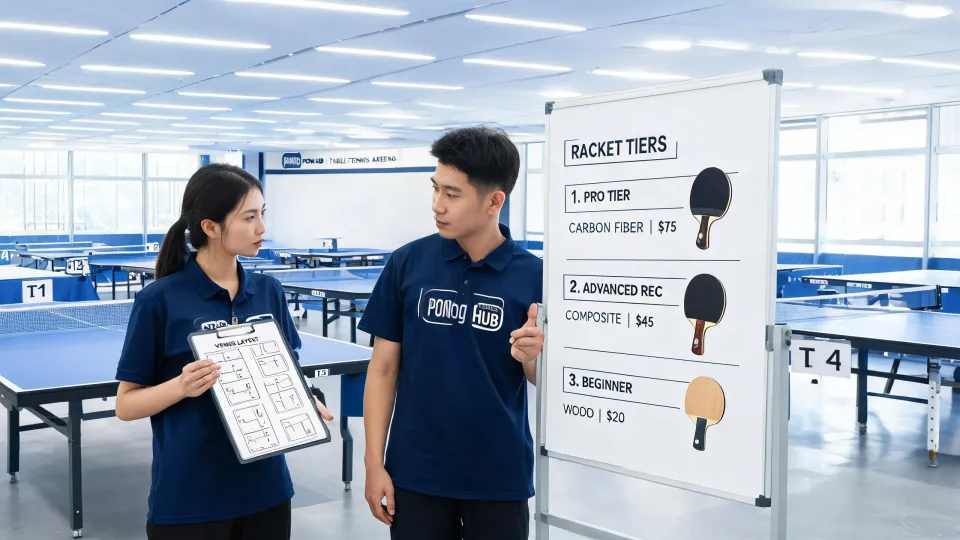
Stiga's product line breaks down roughly into three tiers:
- Recreational (like the Pro 25 set I bought): Pre-assembled, basic rubber, often dead within weeks of daily play. Fine for a basement.
- Training / Advanced Club (like the Stiga Evolution or Perform series): Assembled separately, better rubber, longer lifespan. Good for a busy office.
- Professional / Tournament (like the Stiga Cybershape or Carbonado): High-performance blades and custom rubber. Overkill for most offices unless you have serious players.
I stumbled into the first tier. The company needed the second tier—paddles that could withstand daily play from 20 different people of varying skills and that would maintain their grip and speed for more than a month. This was a mismatch of expectations and reality. The CEO wanted a morale tool; I bought a toy.
The Real Cost of Getting It Wrong
So what did that cheap set cost us? A lot more than $40.
First, the direct cost: I had to replace the entire set after about 10 weeks because the rubber was literally peeling at the edges. (Total: $40 wasted + $120 for a proper set of Stiga Pro 25 paddles—the same name, but different, single-paddle purchases).
Second, the hidden cost: For about a month, the ping pong table was unplayable. It became a storage shelf for jackets. The team's excitement evaporated. That initial $500 investment in the table felt wasted. A colleague from another department actually complained to the VP of Ops that "the office amenities are a joke." That complaint landed on my desk. I looked bad. (Ugh.)
Third, the opportunity cost: The table eventually became popular again after we got the right paddles. It's now used daily during lunch. It's become a genuine social hub. Cross-team conversations happen there. Ideas get generated while waiting for a turn. That's the value of getting the equipment right. I've seen it boost morale measurably, which is hard to put a price on but is definitely real.
The Solution: Stop Searching for 'Ping Pong Paddles'—Search for 'Stiga [Series]'
Here's the simple fix I wish I'd known from the start. Don't search for "stiga ping pong paddles" and hope for the best. Search for a specific series that matches your use case. For an office, the sweet spot is the Stiga Evolution or Stiga Perform series. They're designed for club-level play, meaning they're durable and performant but not overly expensive (around $40-$60 per paddle).
I'm not a logistics expert, so I can't speak to carrier optimization. But from a procurement perspective, I can tell you this: for a busy office, the Stiga Pro 25 (note: the single paddle, not the multi-pack) or the Stiga Advantage (a good mid-range all-arounder) are solid bets. If you have a table tennis enthusiast in the office, ask them. Let them pick the model. They'll know the difference between a 5-ply and a 7-ply blade faster than any Amazon review can tell you.
One more thing: this pricing was accurate as of Q4 2024, but the market moves fast. Always verify current rates. But as a rule of thumb, budget $50-$70 per paddle for a durable, playable office paddle. It's an investment in your team's happiness—and your own peace of mind.
"Dodged a bullet when I finally asked the resident ping pong expert before buying the replacement set. Was one click away from ordering another multi-pack. That would have been a disaster."
A Final Thought on Tax Deductions (Since That Keyword Popped Up)
This gets into legal compliance territory, which isn't my expertise. I'd recommend consulting your tax professional. But from what I understand, for a company to deduct gym equipment (or ping pong tables), it generally needs to be a clear business expense—like a mandatory wellness program or a facility open to all employees. An offhand purchase of a table for fun might not qualify. Take this with a grain of salt. Ask your accountant.