Let's Be Honest: There's No 'Right' Table, Only the Right Decision for Your Space
If you're in charge of outfitting—or upgrading—a game room at a hotel, community center, or even a larger office breakout zone, you already know the problem. There are a dozen factors, and the 'best' product for one location is a waste of money for another.
I'm a procurement manager at a mid-sized hospitality company. Over the past 6 years of tracking every invoice related to our amenity spaces, I've analyzed about $180,000 in cumulative spending across furniture and recreational equipment. I've managed a budget ($150,000 annually) for 6 years. I've negotiated with over 20 vendors for everything from foosball tables to shuffleboards, and I've documented every order in our cost tracking system.
So, when we needed to refresh the game rooms in three different properties last year, we didn't just pick one brand. We broke it down into three distinct scenarios. Here's the framework I used, specific to brands like Stiga (for table tennis and hockey) and the decision-making process for billiard tables and simple card games.
First, Categorize Your Room: High-Traffic, Guest-Facing, or Staff-Only?
Before you even look at the Stiga website or any other catalog, answer this question: Who is using this table, and how often?
- Scenario A: The Hotel Lobby / Public Bar Area (High-traffic, unknown users, aesthetic pressure).
- Scenario B: The Break Room / Staff Lounge (Medium traffic, same users who need durability but don't care about looks as much).
- Scenario C: The Dedicated Event Room / Conference Center (Variable traffic, needs to be versatile, look 'premium' on demand).
Let's cut to the chase: your decision on which Stiga table to buy—or whether to buy a billiard table instead—hinges entirely on which bucket you fall into.
Scenario A: The High-Traffic Hotel Lobby or Bar
Priority: Durability + Aesthetics + Low Maintenance.
This is where conventional wisdom often fails. People assume you need the cheapest option because it will get beat up. In my experience, that's a costly mistake.
For a lobby, table tennis gets heavy use. It's a conversation starter. Everything I'd read suggested you buy a 'commercial-grade' table from a specialized vendor for $2,000+. My experience suggests otherwise.
We looked at the Stiga Advantage line. It's not their top-tier tournament model (that's the ProLine or the Apex). At first glance, the price difference was tempting. The 'Advantage' model retailed around $350 versus the 'ProLine' at $700.
I almost went with the cheaper one until I calculated the TCO. The $350 table had a thinner playing surface (12mm vs. 19mm) and a less robust fold-away mechanism. For a hotel lobby? The thinner surface warps faster under humidity and impacts. The cheaper locks break after six months of aggressive tourists. That 'cheap' option resulted in a $600 redo when the surface warped and we had to buy the better model anyway. So glad I only ordered one as a test before ordering the other two.
My recommendation for Scenario A: Go with the Stiga ProLine 19mm table. It looks professional, it takes abuse, and the wheels actually last. Yes, it's a $700 outlay, but over a 5-year lifecycle, it's actually cheaper per year than replacing a $350 table after 18 months.
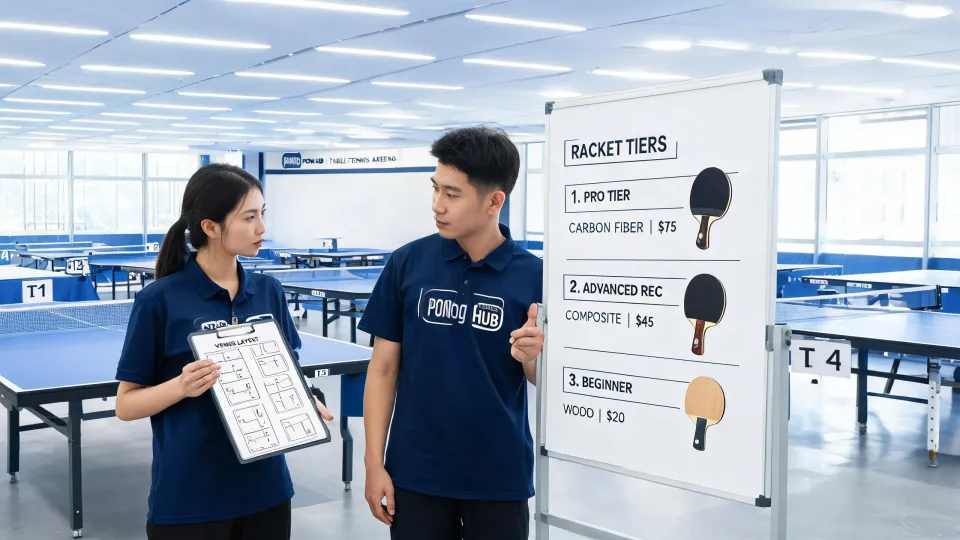
Also, a quick note on the Stiga Carbon+ table tennis paddle. For a lobby, don't buy high-end paddles. People steal them. We bulk-purchased the basic Stiga 2-pack (around $15). The only place a $40 carbon paddle belongs is in Scenario C.
Quick Detour: What about a Billiard Table for this space?
A billiard table is a different beast. In a hotel lobby, it looks amazing. But the TCO is brutal. The maintenance (cloth replacement, leveling) and the fact that it's a single-purpose game for a larger footprint makes it a poor ROI for a high-traffic space unless you have dedicated staff to maintain it. To be fair, it makes a great photo op for Instagram, but that's a marketing budget decision, not a procurement one.
Scenario B: The Employee Break Room
Priority: Functionality + Quick Setup + Variety.
In a break room, the table needs to handle a little of everything. Employees want to play table tennis, but they also want to know how do you play speed card game or a quick round of ride the bus card game.
For this scenario, the Stiga Evolution table (an indoor/outdoor table) is a solid pick. It's less expensive than the ProLine, but the frame is weather-resistant, which is helpful for a break room near a kitchen or coffee station where spills happen.
But here's the 'experience override' moment for me. I used to think a break room needed a massive, professional table. I only believed in the 'multi-game table' concept after ignoring it the first time and watching a $400 ping pong table sit unused because people couldn't fit it into a 15-minute break. Setup was too complex. Switching from ping pong to card games involved moving too much stuff.
Never expected this, but the most popular 'table' in that break room ended up being a simple, sturdy folding table that we used for:
- Card games (Speed, Ride the Bus)
- Lunch
- Occasional quick ping pong (using a portable net from Stiga)
Recommendation for Scenario B: Buy a Stiga indoor/outdoor table (like the Evolution or even a used one from a trade show). Save the budget. Spend $20 on a portable net. Invest the real money in a nice card table.
Oh, and print out the rules for how do you play speed card game and ride the bus card game. The surprise wasn't that people didn't want to play. It was that they didn't know the rules. We laminated the instructions—cheapest engagement boost we ever did.
Scenario C: The Conference Center / Exec Lounge
Priority: Premium Feel + Specific Use Case.
This is the only scenario where I'd recommend the premium options. This is the space for the Stiga Carbon+ table tennis paddle. This is where you buy the Stiga Apex table (their current tournament-level model, roughly $1,500).
In Q2 2024, we switched vendors for a new exec lounge. We compared costs across 2 vendors. Vendor A quoted a standard commercial table. Vendor B quoted the Stiga Apex. Vendor B's quote was $600 higher.
I almost went with Vendor A until I showed the boss the difference. The Apex had a 25mm playing surface, a weight of 250 lbs (so no one was moving it easily), and a built-in retractable playback position for solo practice. Vendor A charged $200 for assembly. Stiga's included it. Total hidden cost difference? Almost 30%.
Recommendation for Scenario C: Full budget. Stiga Apex table, Carbon+ paddle, and a proper billiard table (if the room can handle it, and you have a maintenance contract). This is an investment in impressing a client. Don't skimp.
How to Judge Which Scenario You're In?
Ask yourself three questions:
- Daily Use Rate? If more than 50 people will touch it daily, see Scenario A.
- Is the primary goal 'community' or 'performance'? If it's community (break room, casual bar), see Scenario B. If it's performance (dedicated sports club, exec lounge), see Scenario C.
- Who is maintaining it? If the answer is 'nobody,' buy the tougher, simpler gear.
One last cost-control trick: Don't buy everything from the Stiga website. I've found that buying the table from a dedicated sporting goods distributor and buying paddles and balls directly from Stiga's website (or Amazon) often yields a 5-7% savings on the total basket. A quick search on the Stiga website (stiga.us, as of January 2025) showed a bundle price for tables that was actually cheaper than the sum of parts elsewhere, but for replacements, bulk is always on Amazon.
Dodged a bullet last month when I almost ordered a full set of Stiga Carbon+ paddles for a Scenario B room. One click away from spending $400 on paddles that would get stolen before lunch.