I deal with Stiga equipment orders for community centers and schools. Over the last four years, I've made (and documented) at least six or seven significant mistakes on orders—stuff totaling roughly $1,800 in wasted budget. Most were preventable. I now keep a checklist to avoid repeating them, and I wish someone had shared their errors before I made mine.
Why most clubs choose Stiga—and where they get it wrong
Let's be direct. Stiga is a solid choice for table tennis in shared spaces. Their product range is wide, they've got that table tennis legacy, and they offer indoor and outdoor options. But 'solid choice' doesn't mean 'no pitfalls.'
I've seen the same patterns repeat across different facilities. Here's what I learned the hard way.
1. The question everyone asks vs. the one they should ask
What most buyers focus on: 'Is this Stiga table tournament-approved?'
What they should focus on: 'Is this Stiga table the right fit for our specific space throughput and player skill range?'
That distinction matters more than you'd think.
In my first year (2019), I ordered eight Stiga indoor tables for a new rec center. I went straight for a model that seemed 'professional' enough. The result came back: the tables were too thick and heavy for daily multi-purpose use. We had to store them upright and move them three times a day. $4,200 worth of equipment that was technically high quality—but completely wrong for the venue. Straight from my mistake log.
The lesson? Match the table to the use, not the other way around.
FAQ: Common questions about Stiga equipment
Is Stiga good for professional tournament play?
Some Stiga tables are ITTF-approved for competition. But most facilities don't need that. When I compared the specs on our tournament-rated table vs. the mid-range one we later bought for general play side-by-side, I finally understood why the details matter so much. The tournament table had a 25mm MDF top with specific bounce consistency. The mid-range had 19mm. For casual play, 19mm is fine. For a serious league night? You'd notice the difference.
If I remember correctly, the price difference was roughly $350 per table when I last checked in late 2023. (Should mention: prices fluctuate, so verify current rates.)
What about the Stiga hockey table game? Is that a good add-on?
We got asked about this a lot, so we tested one. The Stiga hockey table game (the small tabletop version) is fun and durable for break rooms or youth areas. It's not a replacement for a standalone bubble hockey table if you want serious play, but as a secondary activity, it's decent. The mechanism holds up well—ours survived two years of moderate use before needing any attention.
People think 'add a hockey game, increase engagement.' Actually, the relationship might be backwards here: facilities with high traffic justify adding variety. The hockey table doesn't drive the traffic; it serves the traffic that's already there.
Is the Stiga Volt ping pong table worth considering?
I've seen the Stiga Volt show up in a few online discussions. Based on what I've observed in our own space and other setups I've visited, here's the honest take.
The Volt is positioned as an entry-level-to-mid-range option. It's okay. The 12mm top is on the thinner side (our baseline for a 'good' recreational table is 15mm+). It's fine for occasional play in a residential setting. For a school or club where table tennis is a regular activity? I'd look at something a step up, like the Pro models or the Advantage series. Spend the extra $150-200 upfront instead of replacing it in 18 months.
Standard print resolution industry note: While we're talking about specs and standards—similar rules apply to table tennis equipment as to printing tolerances. For brand-critical color on your custom table covers, industry standard color tolerance is Delta E < 2. For tables, 'standard' bounce consistency is measured via ITTF parameters. Above Delta E 4 is visible to most people; below 2 is professional grade. The ITTF does for table tennis bounce what Pantone does for color accuracy.
How do I compare Stiga vs. other brands for my facility?
I can't give a direct brand-versus-brand shootout for every competitor. But here's what I've learned about comparing any table tennis equipment for institutional purchase:
- Table top thickness: 15mm minimum for multi-use. 19mm+ for anything you'd call 'quality recreation.' 25mm for serious play. Stiga offers across this range. Know which tier you need first, then check what's available.
- Storage and mobility: Does it fold vertically? Horizontally? Do you have space for that? We bought a model that folded 'flat' but still took up 18 inches of wall depth per table. That sounds small until you multiply by six tables.
- Net system: Stiga's standard nets are acceptable. But the more robust net systems (their upgrade kit) are worth the $25-30 if you expect regular use. We had three nets fail in the first year on the base models. The upgrade nets have been solid for two years now.
- Warranty: Stiga offers different warranty levels depending on the model. Check the fine print. Our most-used tables had a 1-year limited warranty. We got 18 months out of them before any issues, so it worked out, but a 2-year warranty would have been more comfortable.
What about accessories—paddles, balls, covers?
Stiga sells full sets and individual components.
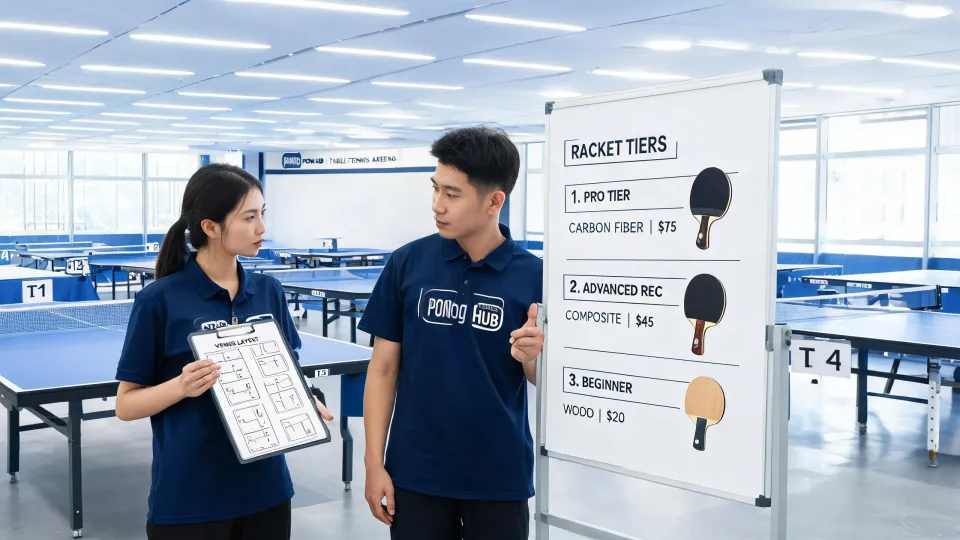
The Stiga paddles that come with table sets are functional for beginners. But if you're equipping a club where people have some experience, budget for separate intermediate-level rackets. The difference in rubber grip and blade feel is noticeable.
Oh, and I should mention: we had a $200 order for replacement rubber sheets that sat in customs for three weeks. If you're on a tight timeline for a season start, factor potential shipping delays into your order. (Order at least 6 weeks ahead if possible.)
What about the Terraria board game and Bose Ultra Open earbuds?
These came up in my research alongside Stiga—they seem to get search overlap. I can't speak to the Terraria board game or the Bose Ultra Open earbuds from personal procurement experience. The Terraria board game is a different industry entirely. The Bose Ultra Open earbuds are audio equipment. Both are unrelated to table tennis or hockey tables. If your facility is looking to diversify activities, I'd recommend focusing on the sports equipment side first before branching into board games or personal audio accessories.
Leg press vs. hack squat: why am I mentioning this?
Probably because someone searched it hoping for fitness advice. But here's the connection: choosing between a Stiga table and another brand is conceptually similar to choosing between a leg press and a hack squat. Both work the same general muscles (both brands make table tennis equipment). They target different specific needs (different tables have different features). The 'right' choice depends entirely on your goal, available space, frequency of use, and user skill level. There is no universal 'best.'
People buy on price but regret on fit, in both exercise equipment and table tennis procurement.
Final honest advice from someone who's been burned
If you're ordering Stiga for a facility:
1. Test before you invest. We tested one table for a month before ordering the rest. That saved us from buying ten units of a model that turned out to be slightly too tall for our younger players. (Should mention: the height difference was minimal—maybe 0.5 inches—but for consistent play, it mattered.)
2. Budget for extras. Table covers, spare nets, extra balls, paddle carrying cases. These add-ons typically total 10-15% of the main equipment cost and are often overlooked in the initial approval.
3. Read the fine print on warranty. 'Limited lifetime' on a Stiga table usually means 1-3 years on the playing surface, but the frame might have a longer warranty. Know what's covered and what isn't before you buy.
4. Expect shipping costs to bite. Table tennis tables are large and heavy. Shipping for a single table can run $50-150 depending on the carrier and distance. For bulk orders (4+ tables), some suppliers offer freight discounts—always ask.
5. Document your mistakes. I wish I'd kept a record from day one. It's easy to think you'll remember, but after a few years and a few dozen orders, the details blur. A simple spreadsheet with what went wrong, what it cost, and what you'd do differently is worth its weight in saved money.
I still keep notes on every order. It's not because I'm paranoid—it's because the last time I skipped documentation, I ordered a $3,200 batch of equipment and completely missed that the tables had the wrong leg mounting hardware. $450 wasted plus a 1-week delay. The checklist lives permanently on my desktop now.
If you're just starting to set up a facility with Stiga equipment, my main suggestion is this: don't chase the absolute cheapest or the absolute 'best.' Chase the best match for your actual use case. Talk to other facility managers. Get real experience before committing to a full fleet. Your budget and your users will thank you.