If you're ordering for a commercial venue, the Stiga Gold-Star series is a great table, but it's likely overkill for about 60% of the setups I've seen. The real waste comes from paying for tournament-level specs when your users are casual players. Let me show you what I learned the hard way.
The Mistake That Cost $3,200 (and a Client)
In September 2022, I specified Stiga Gold-Star tables for a new 10-table facility. They're gorgeous, play like a dream, and meet ITTF standards. The client was thrilled. The problem? Their target audience was college students in a rec center—not tournament players. The tables were so good they actually discouraged casual play. Students felt intimidated. Within three months, the center's utilization rate was below 40%.
I had to swap six of them for Stiga Pro Line models (this was back when the Pro Line was the step-down model). The swap cost roughly $3,200 in re-coordination, shipping, and lost revenue. The lesson: the "best" table for a competitive tournament is often the wrong table for a high-traffic rec center. (This worked for us, but our situation was a university rec center. Your mileage may vary if you're running a dedicated table tennis club where players expect tournament-level feel.)
The 80/20 Rule for Venue Tables
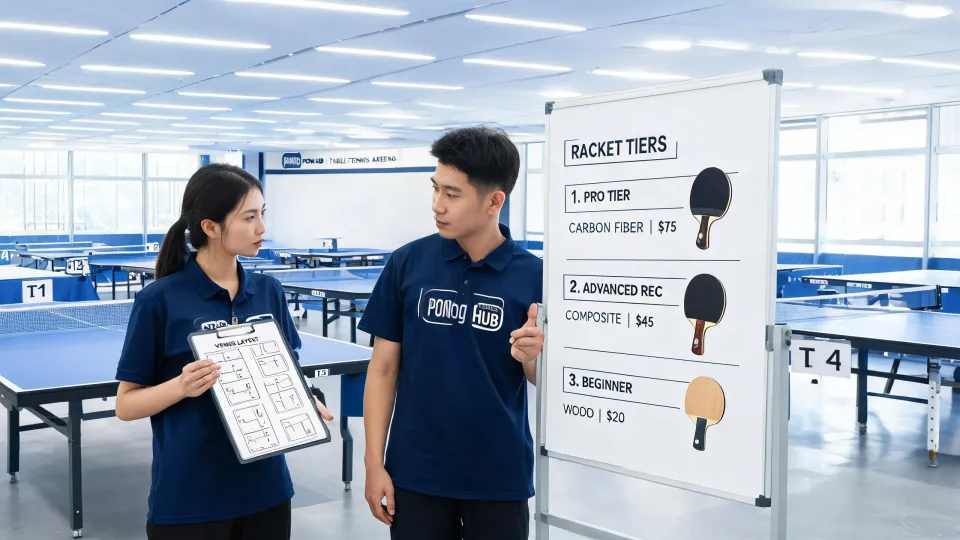
Here's the framework I now use. Think of Stiga's table lineup in three tiers for commercial buyers:
- Tournament Level (Gold-Star series): 25mm MDF, ITTF approved, professional bounce. For clubs, leagues, and high-end hotels.
- Mid-Level (Pro Line series, newer Advance series): 19-22mm MDF, excellent playability, 80% of the tournament feel for 60% of the cost. For rec centers, community halls, and most corporate spaces.
- Entry/Recreational: 12-16mm MDF. For home use or very low-traffic spaces. Not recommended for commercial use.
For a typical multi-purpose venue, the Mid-Level is the sweet spot. The Gold-Star is noticeably better for a serious player, but for a casual user playing once a week, the difference in bounce consistency between a 22mm and a 25mm table is almost imperceptible.
What Makes the Gold-Star Special (and When It Matters)
The Gold-Star series earns its reputation through its construction: a 25mm MDF top with a specialized laminate that provides consistent, high-rebound bounce across the entire surface. The frame is reinforced for stability, and the folding mechanism is heavy-duty. Per Stiga's product sheets, the tables are designed to withstand the rigors of competitive play (e.g., daily use in a club setting).
But here's the nuance that took me a while to grasp: the same features that make it great for competition also make it less practical for casual use. The heavier build (around 250 lbs) makes it a pain to move and store. The high-quality playing surface is wasted if users are just tapping the ball around. It's like putting racing slicks on a family sedan.
My Current Checklist for Choosing a Stiga Table
After the 2022 disaster (and a few smaller ones since), I created a pre-purchase checklist. It's not fancy, but it works:
- What's the primary user profile? If it's a serious club or league, go Gold-Star. If it's the public, students, or corporate employees, go Mid-Level.
- How many tables are you buying? For 5+ tables, the cost difference is substantial. A $300 premium per table adds up to $1,500+ that could be spent on other equipment.
- What's the storage situation? Gold-Star tables are heavier. Do your staff have the strength and space to move them daily?
- What's the expected lifespan? Both tiers last 10+ years with proper care. The Gold-Star's warranty might be longer (check Stiga's latest), but the Mid-Level will still outlast the contract on most commercial leases.
I can only speak to U.S. operations (circa 2025). If you're dealing with international logistics, there are factors I'm not aware of, like shipping costs per weight bracket or local Stiga distributor pricing.
A Note on the "Perceived Value" Trap
There's a temptation to buy the best to signal quality to your customers. I get it. I fell for it. But here's what I've seen: a table that's used is worth far more than a table that's admired. I've walked into venues with budget tables that were packed every night (because the atmosphere and programming were right), and venues with Gold-Star tables that sat empty (because the tables were intimidating, or were locked away to protect them).
One facility I consult for now has a mix: two Gold-Star tables for their small but dedicated club, and eight Pro Line tables for the general public. It's not a perfect solution—the club players sometimes complain about the feel of the Pro Line tables when they have to use them—but the numbers work. Utilization is high, and the budget wasn't blown on features nobody uses.
When to Ignore All of This
There are exceptions. If you're a high-end hotel with a wellness focus and your guests expect premium equipment, the Gold-Star is a solid branding move. If you're running a tournament facility, it's non-negotiable. Also, if budget is truly no object, go for it—just know you're paying for a capability your users likely won't exploit.
But for most B2B buyers outfitting a rec center, a community hall, a school gym, or a corporate break room? The Stiga Pro Line (or its modern equivalent, the Advance series) is the better choice. The Gold-Star is a fantastic table. It's just not the right table for every venue.