If you manage a game room for a living — a sports bar, a family entertainment center, a resort rec room, a corporate breakroom — you've had this exact debate: ping pong or pool?
On one side: a STIGA Evolution ping pong table and a few STIGA Raptor table tennis rackets. On the other: a classic 8-ball pool table. I've been on the buying side of this argument for seven years, managing recreation budgets that peaked around $85,000 a year for a multi-venue operation. The honest answer? It depends on a lot more than the sticker price.
When I first started in this role, I assumed the lowest quote was the responsible choice. Three budget overruns later, I learned that total cost of ownership (TCO, i.e., the purchase price plus every cent you'll spend on maintenance, replacements, and surprises) is the only honest way to compare equipment. So here's the framework I use now, with data from comparing a full STIGA package against an 8-ball pool table across our venues. I'll also touch on board games and video game corners, because those usually come up in the same conversation.
Two Contenders, Four Comparison Criteria
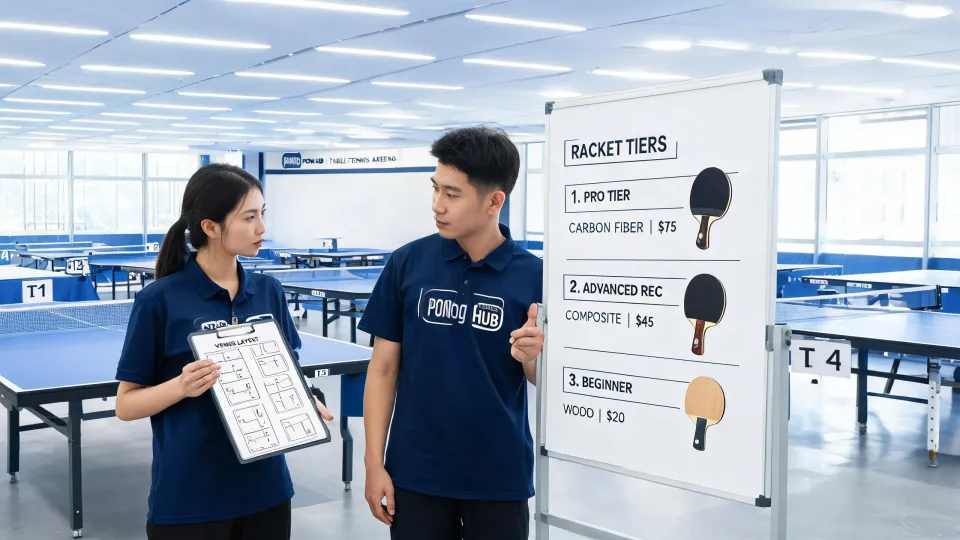
Option A: STIGA table tennis package. The Evolution is a foldable indoor table with an MDF playing surface (typically 15–16 mm at this price point) and a net and post set included. The STIGA Raptor table tennis racket is the workhorse of the package — pre-assembled, forgiving, the kind of paddle you can hand to a guest without a lesson. Rough numbers: the table runs $450–600, and each Raptor costs $25–40, so a package with four paddles and a box of spare balls lands around $650 (based on vendor quotes I pulled in spring 2025).
Option B: 8-ball pool table. The standard for venues is an 8-foot table with a slate bed. Installed, with a basic cue set and balls, you're looking at $1,500–2,500 (also spring 2025 quotes). Slate is the keyword there — more on that in a minute.
I compare every option on four dimensions: five-year cost, floor space, maintenance, and utilization (i.e., how often people actually use the thing once the novelty wears off).
Round 1: Five-Year Cost (Sticker Price Is a Trap)
Up front, table tennis is clearly cheaper. That's not the interesting part. The interesting part is what happens after the boxes are opened.
For the STIGA package, ongoing costs are modest. With daily guest use, racket rubbers wear out, and we refresh paddles about once a year. Budget $120–160 annually for paddles, balls, and the occasional net replacement (an Evolution net costs $20–30). Over five years: roughly $1,300–1,500 all in.
The pool table's consumables are a different animal. Felt needs replacing every 3–5 years under commercial use — $300–450 for a professional re-cloth, depending on cloth grade and region. Cue tips wear, balls crack, and if the building shifts, you'll pay for re-leveling. A realistic five-year total lands around $2,800–3,500.
Here's the rookie mistake I made in year one: I wrote “slate” into the spec without verifying what each vendor meant by it. One attractively priced table turned out to have an MDF bed with a stone-printed finish. It warped within eight months and cost us $1,200 to swap out. (Note to self: slate is a material, not a vibe — get it in writing.)
Verdict: STIGA wins the cost round by a comfortable margin. That said, the gap shrinks if you compare a premium tournament table tennis package against a budget pool table. Compare like for like, or you're just fooling yourself.
Round 2: Floor Space Reality
This is where first-time buyers get frustrated, because both activities need more room than people expect.
A table tennis table follows ITTF standards: 9 x 5 feet playing surface, 30 inches high. But the table is only the start. Comfortable rallies need around 4–5 feet of clearance on all sides for backswings and footwork. I'd want a room at least 16 x 10 feet for casual play, and more if your guests actually know how to hit a loop drive.
A pool table's playing surface is 92 x 46 inches, and with standard 52-inch cues you need clearance on every side. The Billiard Congress of America recommends roughly a 13 x 16 foot room for an 8-foot table. And unlike a ping pong table, it doesn't fold. Once that slab is in, it's in.
This dimension decided things at one of our smaller locations. The Evolution folds flat against a wall and comes out for peak hours; the pool table would have permanently swallowed the room. (Mental note: check the ceiling height too. I've watched a guest put a cue through a ceiling fan, and nobody budgeted for that.)
Verdict: table tennis wins for flexible, multi-purpose spaces. A pool table needs a permanent home.
Round 3: Maintenance and the Hidden Surprises
Indoor table tennis tables don't like moisture, so keep them in climate-controlled spaces. Day-to-day upkeep is simple: wipe the surface, keep the net tension right, replace paddles when they look rough.
Pool tables are heavy — a slate-bed 8-footer can weigh 700 pounds — but they're stable. The recurring cost is cloth. Felt tears, drinks happen, and house cues take abuse. Cue tip replacement becomes a standing line item, which honestly surprised me when I first saw it in our tracking data.
The overconfidence fail I'll own up to: I skipped the final leveling check on an installed pool table because I figured the vendor had handled it. What are the odds it's off, right? Well, the table was off by about half an inch, and every ball drifted left for months until I paid $300 for a technician to re-level it. Those are the costs that don't show up on the quote.
Verdict: push. Table tennis has lower annual maintenance spend, but its components wear out faster. Pool has rarer but more expensive failures — and most of them involve someone cutting a corner.
Round 4: Utilization — Who Actually Plays?
Here's the finding that genuinely surprised me. In 2024, I tracked play across four venues that had both a ping pong area and at least one pool table. Table tennis produced about 3.2x more play-hours per square foot than pool.
In 2024, our tracking showed table tennis generating 3.2x more play-hours per square foot than pool. That single statistic reshaped how we plan game rooms.
The reasons are practical. A ping pong game takes 10–15 minutes; a pool game takes 30–45. Guests drop in for a quick rally between other activities, while pool is a deliberate commitment. That doesn't make pool a bad buy — it means it serves a different crowd. Lounges and bars still love pool because longer games mean more time at the table, and more time usually means more beverage orders.
What About Board Games and Video Games?
If you're planning a full game room, two more options usually enter the conversation. A board game shelf fills a corner for a few hundred dollars and gives guests who don't want physical activity something to do. The Sims board game — the tabletop adaptation of the life-simulation video game — is a good example of a licensed title that pulls in fans who wouldn't touch a paddle or a cue. It won't drive repeat visits like a centerpiece activity, but it rounds out the offering cheaply.
And if you've ever Googled what is a video game developer: a video game developer is the studio or individual that designs, programs, and builds digital games — the people who created The Sims in the first place. A venue can tap into that world with a console or PC corner, which adds a third engagement tier. The catch is that hardware ages fast, and you're competing with every guest's phone. It can work, but it's a different cost conversation entirely.
Verdict: for raw play-hours per square foot, table tennis won in our venues. Pool wins the “linger and spend” game. Board games and video game corners are supporting players, not headliners.
What I'd Actually Buy (and What I'd Skip)
I don't believe in a single correct answer. Here's how I'd frame it, based on your situation:
- Go with the STIGA Evolution + Raptor package if floor space is tight, you want the flexibility to fold the table away, your guests stay 60–90 minutes, or you're a family entertainment center or corporate facility that wants maximum participation for the lowest TCO.
- Go with an 8-ball pool table if you have a dedicated game room that won't be repurposed, your crowd is a bar or club audience that lingers, and you accept felt and leveling as ongoing costs. Buy slate. Check the leveling yourself.
- Add board games plus a console or PC corner if you need to fill niches without spending another few thousand dollars. The Sims board game is a cheap shelf-filler, and a video game station — built by whatever developer made the titles you buy — covers the digital crowd.
If you take one thing from this, take the TCO spreadsheet approach: quote at least three vendors, ask exactly what's included (delivery, assembly, accessories, leveling), and project five years of maintenance before you sign anything. I'd rather spend ten minutes explaining this to a client upfront than deal with mismatched expectations later. An informed customer asks better questions and makes faster decisions — and in this market, that's the whole game.
Prices referenced here are from spring 2025 vendor quotes. Verify current rates before you budget.