I'll say it plainly: most companies waste money on break-room recreation equipment because whoever places the order skips the research.
I used to be that person. After 5 years of handling procurement for our three offices—roughly $75,000 in recreation spending across 20-plus orders—I've landed on a simple rule: 20 minutes of reading reviews before a purchase saves 40 hours of returns, repairs, and damage control after it.
This isn't a personality trait. It's arithmetic. When I say “read reviews,” I do not mean skimming the first two ratings on your phone in the checkout line. I mean looking for patterns across a dozen or more—especially the complaints. Especially the specific ones. That's where the real information hides. Here's the evidence from my own spreadsheets.
The 45 minutes that stopped me from ordering the wrong rackets
When we outfitted our Denver office game room in early 2024, the buy list included a STIGA table, a dozen rackets, extra nets, and enough balls to stock a small tournament. The table was an easy call. The rackets took longer, because “just buy decent ones” is not a specification.
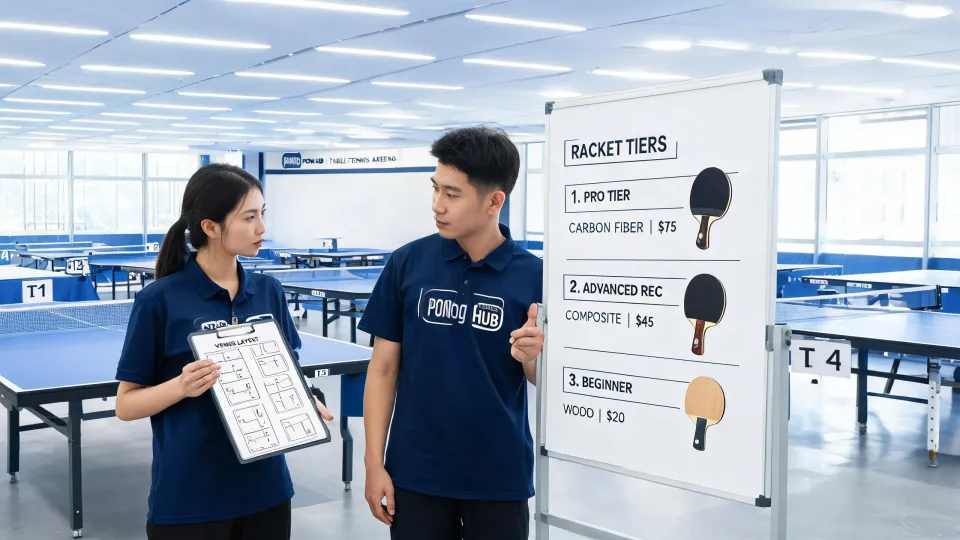
So I did what I should've been doing all along: I read. For about 45 minutes, I went through STIGA Nitro table tennis racket reviews on retailer sites and a couple of equipment forums (the kind where people argue about rubber thickness, which is both exhausting and informative). The consensus: the Nitro is a solid premade racket for casual and intermediate players. But a few reviewers mentioned the rubber loses grip faster if the racket sees daily, heavy use—which is exactly what a break-room racket gets. Plus, a handful of others mentioned the edge tape peeling.
That changed our order. Instead of 12 Nitros, we bought 8 for the general population and 4 slightly stiffer setups for the two engineers and one accountant who genuinely knew how to play. One of those engineers admitted later that he'd been worried when he saw STIGA on the purchase request—he assumed we'd bought the cheapest set available. The reviews let me match the gear to the audience, and that made the difference.
One boundary note: I'm not a table tennis coach, so I can't speak to how the Nitro feels in competitive play or whether it's the right racket for someone with a real rating. What I can tell you from a procurement perspective is that the review data gave me exactly what I needed: durability estimates and audience fit. That's the stuff product descriptions never tell you.
What a $35 cover taught me about risk
Here's where the prevention-over-cure mindset gets real.
We bought our first STIGA table in 2022 for the Austin office. I decided the official STIGA ping pong table cover was an unnecessary add-on. My logic: “It's indoors. What could go wrong?” (I was very naive in 2022.)
By the spring of 2023, the table had a noticeable warp. Someone had been tipping it against an exterior wall near the break room, and the humidity from a bad AC seal did what humidity does. The surface wasn't unplayable, but it was disappointing—the kind of thing you notice every time you pick up a paddle. When I priced a replacement, the number was ugly. The table cover, at that point, cost about $35.
From the outside, a table cover looks like a glorified vinyl tarp. The reality is it's cheap insurance against humidity, dust, and the way people actually treat shared equipment. I bought the cover for the replacement table without a second thought. As of January 2025 it was still around $35 (verify the current price, because it drifts). Our CFO questioned the line item. I asked him how much the warped table had been. He stopped questioning.
The cover alone doesn't fix everything. You still need a rule about where people store the table when it's not in use. But the cover turned a fragile situation into a manageable one. Five minutes of prevention beats five days of correction.
Same rules, different toys: cryptids, arcades, and a card game called War
Here's the part that surprised me. I assumed this “research before buying” habit was specific to sports equipment. It's not. It applies to everything we put in our break rooms.
Take the Twisted Cryptids board game we added to the shelf last year. I'd never heard of it, which itself is a red flag—for me, at least. A quick look at reviews revealed two things: players genuinely love the art, and the game ships with a lot of small components. Multiple reviewers mentioned losing track of pieces after a few sessions. So we added one step to our arrival routine: inventory every card and token against the manual before stocking it. It took ten minutes. If we'd skipped it, I'd bet real money we'd have had a missing piece within a week—the fastest way to make an otherwise fun game annoying.
Then there's the Space Invaders arcade game. Last year we looked into buying a retro cabinet outright instead of leasing one. That's territory that isn't really my expertise—arcade hardware is its own rabbit hole—so I read up. Operator reviews mentioned CRT monitor burn-in, coin mechanism jams, and the growing difficulty of finding replacement parts for 40-year-old machines. That research changed our decision. We signed a service-included lease instead of owning the cabinet. I knew nothing about arcade maintenance when I started, and that was exactly the point: preventing a problem I couldn't even predict.
And the scale goes the other direction too. When someone asked me to stock the game closet with a few simple card decks, I didn't do deep research on the War card game—because it doesn't need any. Here's how to play: split the deck, each player flips a card, the higher card wins, repeat until one person holds all 52. That's the entire game. It took me longer to type that sentence than it did to “research” the purchase. The principle isn't to research everything equally. It's to match the depth of your research to the cost of being wrong.
Sure, but isn't this a little obsessive?
I get the pushback. I used to roll my eyes at people who read 40 reviews before buying a kettle. But I changed my mind because I got burned—twice, actually.
The first time, I ordered a cheap table from a vendor that undercut our regular supplier by almost $400. The catch surfaced at invoicing: they couldn't provide a proper invoice, only a handwritten receipt. Finance rejected the expense report. I ate the $400 out of the department budget, and the table was mediocre anyway. That vendor saved me zero dollars in the end.
The second time was less dramatic but more instructive. We stocked a popular strategy game without checking its component list. The box looked fine. We didn't inventory it. Two weeks later, an employee asked whether we'd ever had the full set—cards were missing and nobody wanted to say who lost them. It was a $35 game, not a $900 table, but the pattern was the same: skip the check, pay later, look careless.
So yes, I've become the person who verifies things. It took me 4 years and roughly 120 orders to understand that the cheapest vendor is rarely the cheapest outcome, and that “we'll deal with it if it's a problem” is how small problems become budget items.
One caveat: my experience is based on outfitting three office game rooms for a mid-size company. If you're stocking a professional training center or a commercial venue, your standards should be higher, and some of my “good enough for the break room” calls won't apply. The method still holds—you just calibrate the bar.
Also, for what it's worth, the details matter in small ways too. When we printed the rules poster for the game room this year, I made sure the file was 300 DPI at the final print size—the standard for commercial print—because a blurry poster is a poster nobody reads, and an unread poster means arguments about the rules. It felt pedantic at the time. It still does. But nobody argues about the rules anymore.
Bottom line
Nobody ever lost their job for reading one more review. But I've seen people lose credibility for skipping it and then having to explain why the new table arrived with a dent, or why the fun board game is missing its best cards, or why the office is stuck with an arcade machine they didn't understand.
So here's my pitch: before you spend your company's money on recreation equipment, spend 20 minutes reading what other buyers and players actually said. Check that the cover fits the table. Inventory the game pieces. Look up the maintenance costs. It's not obsessive. It's the cheapest insurance you'll ever buy.
Trust me on this one—I've been on both sides of the mistake.