-
Why I Chose the ST4100 (In One Paragraph)
-
What 'Evolution Series' Actually Means for a Buyer
-
What Setup Taught Me About Buying Office Equipment
-
How It Held Up After 10 Months of Daily Play
-
One Caveat: Don't Buy the Full Package Blindly
-
Warranty and Support: The Boring Part That Matters
-
Who Shouldn't Buy This Table?
-
Bottom Line
If you're a facility manager or buyer trying to pick a table tennis table for a commercial space, get the STIGA Evolution Series—specifically the ST4100—if your budget allows. It's the one table that survived a year of daily abuse from our staff without warping or losing its bounce. I don't say that lightly. Between 2020 and now, I've ordered four different ping pong tables for our office, and the ST4100 is the only one I'd reorder without a second thought.
I'm the office administrator for a 400-person company across three locations, and I handle all the recreation and fitness equipment procurement. If you've ever tried to buy a table that won't get destroyed by recreational players who absolutely do not treat equipment gently, you know the struggle. This isn't about choosing a table for your basement. It's about choosing one that can take a hit.
Why I Chose the ST4100 (In One Paragraph)
The ST4100 is the sweet spot in STIGA's lineup. It's not their absolute top-tier tournament table, but it has the features that actually matter for a shared space: a sturdy steel frame, a thicker playing surface than entry-level tables, and locking wheels that don't wobble loose after a month. Also, it's part of the Evolution Series, which basically means STIGA designed it for players who are past the 'fold-up-lean-against-the-wall' stage.
Honestly, I made the decision based on one thing: the frame. I had a cheaper table before this where the undercarriage bent because two guys leaned on it during a close match. The ST4100's frame is noticeably more solid. That's not a spec I could verify from the product listing—I only appreciated it when we were assembling it.
What 'Evolution Series' Actually Means for a Buyer
STIGA splits its table tennis tables into a few tiers. The Evolution Series is their mid-to-high range, and the ST4100 fits right in there. It's not the most expensive table they make, but it's the one where they started taking the build quality seriously. If you're comparing it to, say, a cheap table from a big-box retailer, the difference is night and day.
One thing I learned: when brands make a 'series' of products, they don't always share the same DNA. After 5 years of managing this stuff, I've noticed that a series name is often just marketing. But with the Evolution Series, the common denominator is the surface quality. The tabletop is where STIGA clearly put their engineering effort.
The playing surface is a 3/4-inch particle board, which isn't as premium as the 1-inch tournament-grade stuff on the ST8300, but it's honestly more than enough for an office. The ball bounce is consistent across the whole surface. That matters more than you'd think. On the cheap tables we had, there were dead spots—the ball would just sink in certain areas. That doesn't happen on the ST4100.
What Setup Taught Me About Buying Office Equipment
The numbers said to go with a different table—it was roughly $150 cheaper, and the specs looked nearly identical on paper. My gut said to stick with the STIGA because of the brand's reputation in table tennis. I went with my gut. Later, a maintenance guy from the other vendor showed me the cheaper table's frame we stored away: the steel tubing was thinner, and the joints were spot-welded rather than bolted. That's the kind of thing you can't unsee.
Assembly was straightforward, but I warn you: it's a two-person job. The ST4100 weighs around 170 pounds. I helped our maintenance team carry it to the third-floor break room, and the integrated wheels made the final positioning a lot easier. Just make sure you have a wide enough path. We had to unbox it in the hallway and carry the pieces into the room.
Also, check the ceiling height. This sounds obvious, but I measured it wrong the first time and we had to move the table to another corner because the ceiling light was in the way. A standard 8-foot ceiling is usually fine, but if you have any pendant lights, think about the lob shots.
How It Held Up After 10 Months of Daily Play
This is the part that surprised me. I expected wear and tear on the surface, but the ST4100's coating has held up remarkably well. We have employees who play during lunch, and some of them are not gentle. I've seen the table take drinks, kneecaps, and the full weight of a player trying to return a shot on the run. The surface still looks good, and the white lines haven't started peeling.
To be fair, it's not indestructible. We had to re-tighten the net posts after the first month—they shifted slightly from the tension. But that's a 5-minute fix, not a structural issue. The net itself is mid-quality; I'd budget for a replacement net after two years, but that's not a dealbreaker either.
One Caveat: Don't Buy the Full Package Blindly
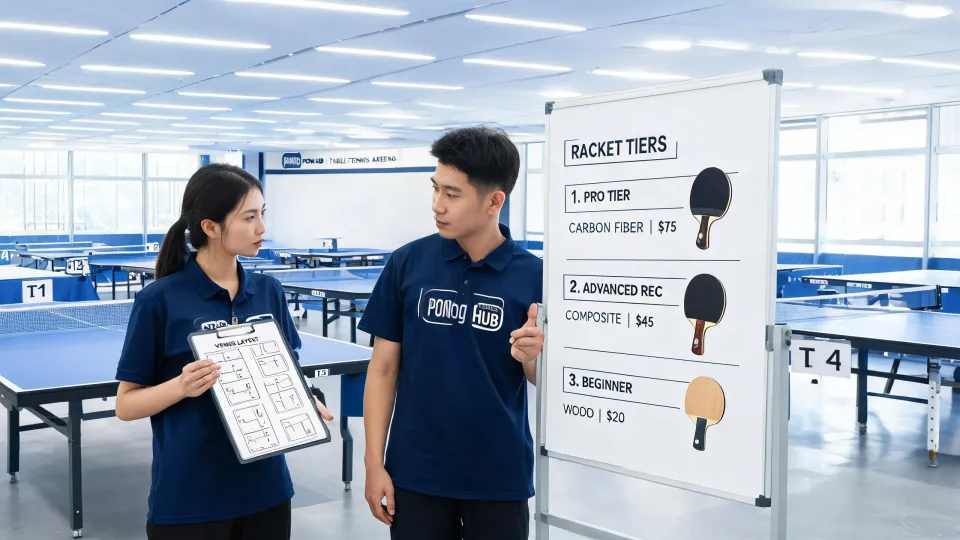
Here's where I get honest. When you order a table like the ST4100, you might be tempted to buy the matching STIGA paddles and balls in the same cart. Don't do what I did and just click 'add to cart' without checking what's included. The table includes two rackets and a ball, but they're basic. If your break room has serious players, those paddles will feel like bricks. I had to buy a set of better STIGA Evolution rackets separately after the third complaint.
The table itself is a strong yes. The accessories, not so much. That's not a STIGA-specific problem—most table manufacturers include throwaway paddles. Plan for it in your budget.
Warranty and Support: The Boring Part That Matters
I know no one wants to read about warranty terms, but this is where STIGA won me over as an administrator. The ST4100 comes with a limited 90-day warranty on parts and a year on the tabletop. I've had to deal with way worse. The vendor we bought from (an authorized retailer) was responsive, and we didn't need to file a claim, but I've learned that it's worth checking the model's warranty before you buy. The worst products I've dealt with are the ones where the manufacturer clearly doesn't stand behind them.
One tip for B2B buyers: register the warranty immediately. STIGA has an online registration portal, and it takes two minutes. We almost skipped it, but it's worth doing the same day you assemble the table.
Who Shouldn't Buy This Table?
Not everyone needs the ST4100. If you run a dedicated ping pong club or a serious training facility, you'll want a tournament-certified table with a heavier base and thicker top—the STIGA ST8300 is in that territory. The ST4100 is for places where people play for fun, not for certification points. Our office is the perfect use case.
And if your space is tight—like a small waiting room or a lounge that's already crowded—get a smaller fold-up table instead. The ST4100 is a full-size competition table (9 feet long, 5 feet wide), and it needs room on all sides for players to move. We only have about 8 feet of clearance on the sides, and it's playable, but not ideal. Give yourself 10 feet if you can.
One last thing: the price. As of May 2025, the ST4100 typically retails between $550 and $650, depending on the retailer. Verify current pricing because it fluctuates with sales and shipping costs. But if I'm being honest, the peace of mind is worth the extra cost vs. the $350 tables. I would have spent way more in replacement parts and annoyance if I'd gone the cheap route.
If you're weighing the ST4100 vs. the other Evolution Series tables, the main difference is the extra features like deeper aprons and more robust undercarriages. For a general office environment, the ST4100 is the value pick. You're paying for the build quality without paying for the tournament-level specs that your employees will never use.
Bottom Line
I've been burned by flashy products that can't handle real-world use. The STIGA ST4100 is not one of those. It's a solid, durable table that looks good, plays well, and has held up far better than I expected. If you're buying for a business, a school, or any high-traffic environment, this is the one I'd recommend. Just don't ship it to a room with a low ceiling, and buy better paddles.