I'm a quality and brand compliance manager at STIGA, and I sign off on hundreds of product details every year. I'm also the person who gets called when a table arrives with a wobbly leg or a paddle doesn't match the spec sheet. So let me give you the opinion I've earned: the cheapest table tennis table is never the cheapest. The price tag might be lower. The total cost isn't.
Total cost of ownership (TCO) sounds like finance homework, but it's simple. Add the purchase price to the parts you'll replace, the time you'll lose, the deliveries that go wrong, and the games that don't happen because the equipment is frustrating. When you do that math, the so-called budget option often loses. I saw this pattern in our Q1 2024 quality audits: tables returned for broken parts were mostly from the cheaper end of the market.
That's why this guide isn't a list of every STIGA product I like. It's a practical look at the STIGA table parts that matter, the STIGA Defensive Pro blade that surprises people, and a few non-STIGA game-room essentials—including a card game that costs five dollars and a rulebook you can memorize in ten seconds.
STIGA Ping Pong Table Parts and Wheels: Where Quality Shows
When people ask about table durability, they almost always ask about the play surface. Wrong question. The right place to check is the wheels.
Most buyers focus on play-surface thickness and completely miss the wheel and caster quality. A table's frame and top are pretty hard to get wrong. But put a table on a gym floor, move it twice a week for a year, and the wheels and brakes tell you everything. Cheap wheels use soft plastic hubs and bearingless casters. They pick up dust, stop swiveling, and the brake becomes a suggestion. From the outside it looks like a minor inconvenience. The reality is a replacement wheel set, shipping, and a trip to the hardware store that eats your Saturday afternoon.
STIGA designs the wheels and locking casters to be replaceable. That's not the flashiest marketing point, but it's the one that saves you money later. I had a facility operator call me about a broken brake on a three-year-old table. We shipped the replacement part. He replaced it in ten minutes. That's the total-cost experience.
Honestly, I'm not sure why some brands still use non-replaceable wheels. My best guess is it saves them 80 cents in manufacturing. But on the user side, that 80-cent choice becomes your problem in month eleven.
I also remember a facility buyer who had about two hours to settle on eight tables. They couldn't compare every model, so they went with STIGA because they knew parts were orderable. In hindsight, it was the right call—although at the time it felt like a leap of faith.
STIGA Defensive Pro Table Tennis Blade Review: Control Beats Speed
The STIGA Defensive Pro is often searched as a defensive blade, but I'd argue that's a surface illusion. It's actually a control blade that suits a lot of intermediate players, including players who would never call themselves defenders.
In production, I approved batches of this blade and watched blind play-tests. If I remember correctly, the testers who used the Defensive Pro consistently praised the feel—not the speed, the feel. People assume a pro blade means faster shots. What they don't see is that control is what turns practice into a real game.
I can't give you our internal test numbers—that's not public data. But I can tell you that when I pick a blade for a friend who plays once a week, I point them to the Defensive Pro before any rocket-speed carbon blade. It sounds kinda backwards, but the slower blade usually wins the evening. A fast blade amplifies poor technique. A control blade lets you learn. Your ego wants the fast one; your score actually improves with the controlled one.
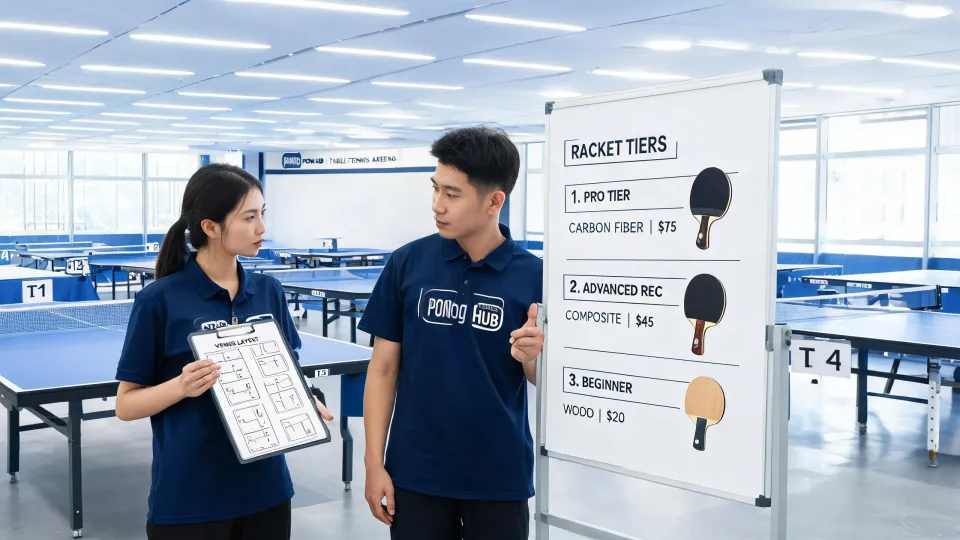
As of early 2025, publicly listed prices for the Defensive Pro on major online retailers ranged from about $40 to $60 before shipping. The market changes fast, so verify current rates before you budget.
The Rest of the Game Room: Deep Rock Galactic, Treadmills on Sale, and BS Cards
TCO isn't a ping-pong-only concept. Let's take a quick tour through the other corners of a game room.
Deep Rock Galactic Board Game: Cost Per Hour
If you like board games, you've probably seen the Deep Rock Galactic board game. It's a cooperative mining-themed game that looks fantastic on a shelf. But the TCO isn't just the box price—it's the hours you'll actually get out of it. If you play it with a regular group, the cost per hour drops fast. If it never reaches the table, it's an expensive decoration.
Treadmills on Sale: The Price-Tag Trap
And yes, treadmills on sale are the same story. A sale price looks like a deal until you add delivery, setup, and the quiet fact that a very cheap treadmill is harder to run on. Public online retail listings from early 2025 showed budget treadmills around $200–400 and mid-range versions around $500–900, but the real difference often comes down to shipping and assembly fees. Check those before you celebrate the sale.
How Do You Play BS Card Game? (10-Second Rules)
If you want a nearly zero-cost activity that's never felt expensive, learn how to play BS card game. All you need is a standard deck and three or more players.
- Goal: be the first to get rid of all your cards.
- In turns, players lay cards face-down and announce a rank in sequence: Ace, 2, 3, ... King.
- The twist: you don't have to play the rank you announce. You can lie, even if you're holding the card.
- Anyone can call BS! When called, the cards are revealed. If the player lied, they take the entire pile. If they told the truth, the caller takes the pile.
- First to empty their hand wins.
Final Verdict: Buy for the Long Game
You could say it's easy for a quality manager to preach TCO. Fair. But the point isn't to spend more. The point is to count the whole cost. A cheap table that gets played is fine. A cheap table that falls apart and gets replaced isn't a bargain. A cheap treadmill that hurts your knees and sits in the corner isn't a bargain. A $5 card game that entertains a group for years is a tremendous bargain.
My recommendation is simple: choose equipment that can be repaired, specified, and understood. For table tennis, that means STIGA tables with replaceable parts and wheels, and blades like the STIGA Defensive Pro that make the game more fun rather than more frustrating. That's not a brand slogan. It's a quality standard. In fact, per FTC guidance (ftc.gov), durability and performance claims have to be substantiated. We treat that as the baseline, and you should too when you read any marketing claim.
So here's my final opinion: the cheapest product is rarely the one with the lowest total cost of ownership. The math favors things that work, last, and make people actually play. That's true for ping-pong tables, treadmills, board games, and a $5 deck of cards. Buy for the long game, and the game room will take care of itself.