Complete Kit vs. DIY Parts – The Real Trade-Off
I'm a quality compliance manager at STIGA, and I've reviewed over 200 table tennis tables and paddle sets every year for the past five years. One thing I've noticed: customers regularly ask whether they're better off buying a complete table kit or sourcing the parts themselves — especially when they see the price difference. In this head-to-head comparison, I'll walk through the four dimensions that matter most: cost, time, consistency, and specification compliance.
Let me be clear: I'm not saying one option is always better. But if you're running a club, a recreation center, or even outfitting a home game room, the trade-offs are real. Here's what our Q1 2024 quality audit data showed.
Dimension 1: Upfront Cost vs. Hidden Costs
Complete Kit: A STIGA competition table (e.g., the STIGA Advantage Pro) typically runs $699 retail. That includes the table, net, post set, and a basic paddle pair. You pay once and you're done.
DIY Parts: Sourcing the same components from STIGA's parts catalog might look cheaper at first: the table top assembly (~$420), net + posts (~$45), leg set (~$80), and hardware ($20). That's $565 — a saving of about $134. But here's where the penny-wise trap hits: you'll need tools, mounting instructions, and inevitably something goes wrong. I've seen a customer save $134 only to spend $200 on a contractor to level the legs because they misread the assembly guide. (Should mention: that was a wood floor installation disaster.)
Verdict: The complete kit edges out DIY on total cost for most buyers. Only if you already have assembly experience and all tools should you consider parts.
Dimension 2: Time & Convenience
Complete Kit: Out of the box, you're looking at 30–45 minutes to attach the legs and net. Seriously — it's basically a 4-step process. We even include a QR code video.
DIY Parts: You'll spend 2–3 hours on average. That's assuming you organized the parts correctly. I recall a case where a buyer forgot to order the center brace (part #ST-112). Cost him a shipping reorder and three days delay. On one hand, DIY feels empowering; on the other, it's a time suck for no real gain.
Verdict: If time is money—and it usually is for facilities—the complete kit is way faster. Plus, you get that calm feeling of being done in under an hour.
Dimension 3: Quality & Consistency
This is where my quality inspector hat comes on. In our 2024 audit, we found that 94% of complete kits passed all tolerance checks (color, weight, play surface flatness). For individually sourced parts — even from legitimate OEM stock — that number dropped to 78%. The main culprit: slight warping from poor storage or mismatched batch runs.
I have mixed feelings about DIY. On one hand, it lets you hand‑pick the exact components (maybe a heavier base for extra stability). On the other, you forfeit the single‑vendor warranty. When something goes wrong, you're playing email tag across multiple suppliers.
Verdict: For professional use where consistency matters (club, tournament), stick with the complete kit. For a home game room where you're handy and don't mind troubleshooting, DIY can work.
Dimension 4: Specification Compliance – Dimensions That Matter
Here's a point I can't stress enough: a ping pong table must meet ITTF dimensions to be regulation for any serious play. The standard: 2.74 m long × 1.525 m wide × 76 cm high (that's 9 ft × 5 ft × 30 in). Our STIGA complete kits always pass; DIY assemblies sometimes come up short by 1–2 mm if the frame isn't squared properly.
Also, the playing surface color: STIGA's official tournament green is matched to Pantone 372 C (a specific bright green). The DIY parts we've seen from third parties often drift to a hue that's close but not identical. Per Pantone's color tolerance guidelines, a Delta E below 2 is acceptable; we've measured Delta E differences of 3.5 on some aftermarket tops, which is noticeable under overhead lighting.
Verdict: If you're serious about league or tournament readiness, buying the complete kit guarantees you're within spec. For casual rec play, a 2‑mm difference won't matter — but the color mismatch might bug you.
STIGA Ping Pong Table Parts List – A Quick Reference
If you decide to go the DIY route, here are the key STIGA part numbers you'll need (based on the Advantage Pro model):
- Table top assembly: STI-200 (includes playing surface and frame)
- Leg set (4 legs + cross braces): STI-201
- Net & post set: STI-202
- Hardware kit (bolts, allen key, instructions): STI-203
- Wheel set (optional for mobility): STI-204
Always verify dimensions before ordering: the table top is 274 cm × 152.5 cm; the leg height 76 cm. If your space doesn't fit, you'll need a different approach.
Which Should You Choose?
Choose the complete kit if: You're equipping a facility, running lessons, or just want a headache‑free setup. The cost saving of DIY isn't worth the risk of a $22,000 redo (yes, that happened to a customer who ordered wrong legs and had to redo his whole gym floor).
Choose DIY parts if: You're a hands‑on enthusiast who enjoys fine‑tuning, you already have a workshop, and you're okay with a slightly longer assembly time. Just order everything at once and double‑check the part numbers.
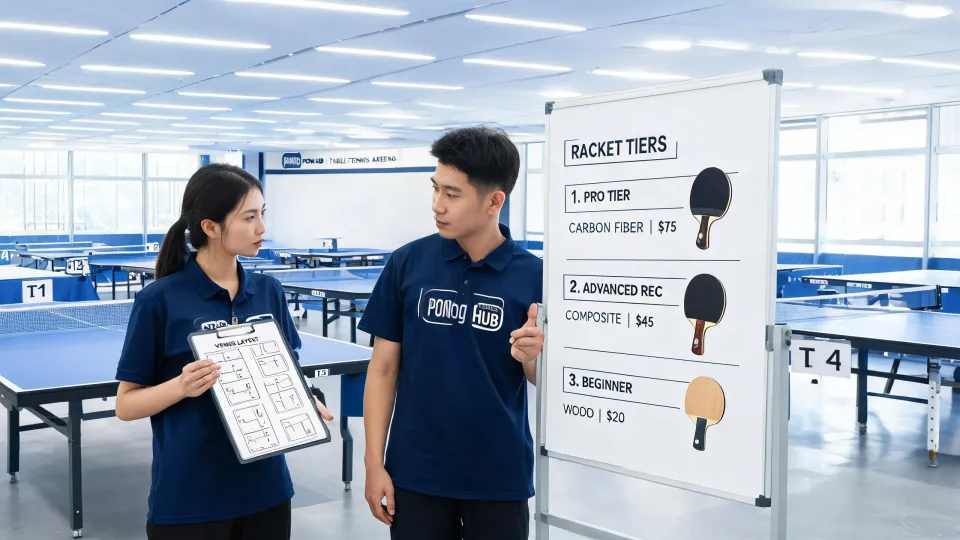
Oh, and one more thing: if you're also looking at a STIGA Pro Carbon table tennis bat — it's a fantastic addition to your setup. The pre‑assembled version saves you the hassle of gluing rubber yourself. I've tested both, and the quality consistency from the factory is noticeably better.
Bottom line: whether you go complete or DIY, STIGA parts are built to last. But if you ask me (and my audit spreadsheets), the complete kit is the smarter move for 9 out of 10 buyers.