-
Who This Checklist is For
-
Step 1: Measure Your Space—and Account for Play Area
-
Step 2: Choose Between Indoor and Outdoor (It Matters More Than You Think)
-
Step 3: Verify Dimensions and Foldability for Storage
-
Step 4: Compare Pricing Transparently—Don't Just Look at the Sticker Price
-
Step 5: Verify Replacement Parts Availability
-
Step 6: Check the Accessories Included (and What's Extra)
-
Step 7: Confirm the Warranty and Return Policy
-
Step 8: Plan for Delivery and Assembly
-
Common Mistakes People Make
-
My Bottom Line
Who This Checklist is For
If you're managing a sports facility, recreation center, or corporate break room, eventually someone's going to ask you to buy a ping pong table. Not just any table—something that'll survive real use without falling apart in six months. It's a straightforward purchase, right? Not quite.
I've been handling procurement for a mid-sized recreation chain for about five years now. We've got three locations, and I manage everything from the Nautilus gym equipment to the reception desk snacks. When I first started, I thought buying a table tennis table was simple—compare size, pick a color, order. I learned the hard way that there's more to it. Here's a checklist of 8 steps I now use for every table order. It'll save you from the headaches I ran into.
Step 1: Measure Your Space—and Account for Play Area
First things first: you need to know your room's dimensions. That's obvious. But here's what I missed the first time: you don't just need space for the table itself. You need room for players to move.
A standard STIGA competition ping pong table is 9 feet long, 5 feet wide, and 30 inches high. But the play area needs at least 12 feet by 18 feet for casual games. For tournament-level play, you're looking at 20 by 40 feet. If you're installing multiple tables, multiply that space.
I once ordered three tables for a new facility—only to realize they'd be practically touching each other when set up. We had to return one. That return cost us a restocking fee and shipping. Not fun.
Step 2: Choose Between Indoor and Outdoor (It Matters More Than You Think)
You'd think a table is a table. But indoor and outdoor models are different beasts. Indoor tables have a smoother playing surface and are generally lighter. Outdoor tables are built to handle sun, moisture, and temperature swings—they're heavier and have a textured surface that slows the ball slightly.
Our main facility has indoor tables for the rec room. But our outdoor patio area? We picked up a couple of weatherproof STIGA tables. They cost about 20-30% more, but they haven't warped or faded after two Michigan winters. I'm not exaggerating when I say the outdoor ones were worth every penny.
So: where's the table going? If it's indoors, you have more options. Outdoors, invest in a dedicated weather-resistant model. Don't try to use an indoor table outside—it'll be ruined within a season.
Step 3: Verify Dimensions and Foldability for Storage
Not all tables fold the same way. Some fold in half and stand upright for storage. Others fold and roll away on wheels. If you plan to store the table when not in use—which you should, to protect it and free up space—you need to know the folded dimensions.
For example, a STIGA Advantage foldable table might be about 60 inches wide by 30 inches deep when stored, with a height around 62 inches. That needs to fit through your doorways and into your storage closet.
I've had to measure passageways and storage rooms before purchase. It's a pain, but it beats having a table delivered that literally can't fit through the door. Ask me how I know.
Step 4: Compare Pricing Transparently—Don't Just Look at the Sticker Price
Here's the thing: the price you see isn't always the price you pay. As of early 2025, a decent entry-level STIGA table might run $300-500. A mid-range competition model can be $600-900, and a professional-grade table can hit $1,500 or more.
But I've learned to ask: what's NOT included? Some vendors list a low price—then add fees for delivery, assembly, or accessories like the net and rackets. Others bundle everything. A table that's $450 might actually cost $550 after shipping and a mandatory white-glove delivery fee. Meanwhile, a $500 table with free shipping and included accessories is the better deal.
In 2023, I compared three vendors for a bulk order of six tables. The cheapest per-unit price was from a lesser-known brand. But when I added up shipping, setup, and a required additional warranty, it ended up being $200 more per table than the mid-range STIGA option from a reputable distributor. The vendor who listed all fees upfront—even though their total looked higher—cost less in the end.
So here's my rule: always ask for a total landed cost. That includes the table, shipping, taxes, installation, and any add-ons you'll need.
Step 5: Verify Replacement Parts Availability
Tables take a beating. Ripped net, broken leg adjuster, worn-out playing surface. When that happens, you don't want to buy a whole new table. You want to buy a replacement part.
Before I commit to any brand, I check: can I easily buy STIGA ping pong table replacement parts? For a well-known brand like STIGA, the answer is usually yes. You can get replacement nets, legs, even entire tabletop sections. But for lesser-known brands, finding parts can be a nightmare.
Back in 2021, we had a table from a no-name brand. The net broke in six months. No replacement parts available. We had to buy a generic net and rig it up. It never played the same. Now I stick with established brands for this reason alone.
Step 6: Check the Accessories Included (and What's Extra)
Most tables come with a basic net and maybe a couple of paddles and balls. But these are often low quality. If you're outfitting a facility, those starter paddles won't last a week.
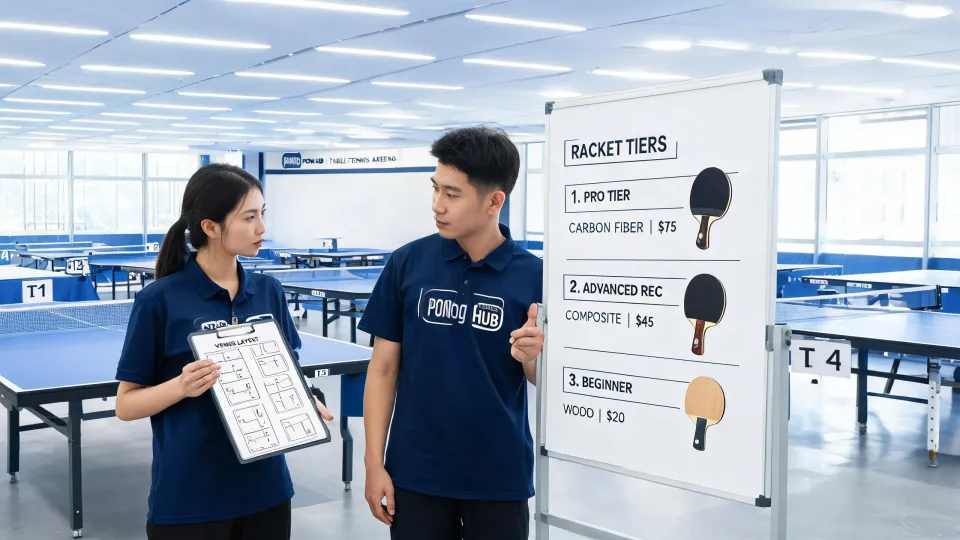
I recommend budgeting for a separate set of quality paddles. For example, STIGA's pro carbon racket is a solid mid-range option. A 2-pack of decent paddles might cost $30-50. Good balls (3-star, 40+mm) are about $1 each in bulk. We also buy side tape to protect the edges. These add up.
So when you're looking at a table price, ask yourself: what's the total cost to have it ready for play? The table plus a decent net system plus a few sets of rackets and a dozen balls plus side tape. That's your real starting point.
Step 7: Confirm the Warranty and Return Policy
Tables arrive damaged sometimes. Or they don't meet your expectations. Can you return it? What's the restocking fee? Who pays for return shipping?
For our facility, we insist on at least a 30-day return window. Many online retailers offer this, but some don't. And don't assume warranty covers everything. Most table warranties cover the frame and playing surface but not the net or accessories. Some exclude damage from improper assembly.
I always save the original packaging for at least two weeks after delivery. It's saved us once when a table arrived with a dented corner. We took photos, contacted the vendor, and had a replacement within a week.
Step 8: Plan for Delivery and Assembly
Last step: who's going to get it into the building and put it together? Many tables ship on a pallet. They're heavy—a 9-foot table can weigh 150-250 pounds. You'll need at least two people to move it.
Some vendors offer curbside delivery only. Others will bring it inside and even set it up. That service typically costs $75-150 extra. For a busy admin like me, that's often worth it. But if you have a maintenance team who can handle assembly, you'll save that money.
Assembly time varies. A foldable table might take 30-60 minutes for two people. A non-foldable model can be more complex. Read the instructions ahead of time—or delegate to someone handy.
Common Mistakes People Make
Over the years, I've seen a few recurring errors:
- Ignoring the play area. You can't play safely with chairs and tables crowding the court. Plan the room layout before buying.
- Choosing looks over durability. A glossy, thin-laminate table might look nice, but it won't hold up to daily use. Look for thicker tops (at least 3/4 inch) with a consistent bounce.
- Forgetting about net tension. A cheap net sags and doesn't stay tight. You'll constantly be adjusting it. Invest in a good net system from the start.
- Not comparing total costs. As I said earlier, the lowest price isn't always the cheapest. Do the math.
Of course, there's always a trade-off. A higher-end table costs more upfront but lasts longer and plays better. For a high-traffic facility, I'd always lean toward the professional series. For a break room, a mid-range model is fine. Just don't expect a $200 table to survive a busy rec center.
My Bottom Line
Buying a ping pong table for your facility doesn't have to be complicated. Work through this 8-step checklist and you'll avoid most of the pitfalls I encountered. Measure your space, choose the right type, compare total costs, verify parts availability, and plan for delivery.
Oh, and one more thing: if you're ordering multiple tables, ask about bulk discounts. I've saved 10-15% on orders of 5+ tables just by asking. It never hurts to try.