When our operations director dropped the rec room project on me one Tuesday in January 2025, I'll be honest—I rolled my eyes a little. Not because the idea was bad, but because I knew exactly what it would mean: budget meetings, stakeholder opinions from every corner of the office, and a lot of research on things I knew nothing about.
I'm the office administrator for a mid-size logistics firm, about 220 people across two floors and a satellite warehouse. I manage all the facilities and supplies ordering—roughly $180,000 a year across 12 vendors. I report to both operations and finance, which is a polite way of saying I get pulled in two directions on every purchase.
The recreation room was a "Q1 initiative" with a healthy-ish budget of $25,000. The idea: give employees a place to decompress. The reality: no one had decided what that looked like. That was my job.
The Table Tennis Question
The game zone was the easiest call. Table tennis was the one activity people agreed on. I ran a Slack poll (weirdly democratic, I know), and ping-pong won by a landslide. So I started researching tables.
That's when STIGA entered the picture. I don't have hard data on table tennis brand preferences across the industry, but based on the number of clubs and rec centers I talked to during research, my sense is STIGA and Butterfly are the two names that come up most. I chose STIGA for practical reasons: the product range is wide enough to offer options without overwhelming anyone, and the build quality feedback was consistently solid.
The table we landed on was a STIGA model in the mid-range. I wish I had tracked all the specs more carefully, but what I can say anecdotally is that the difference between a $300 table and a $700 one is noticeable. The frame rigidity, the wheel locks, the net tension system—everything just handled better. We went with one in the $500-600 range, which for a rec room that would see heavy daily use felt like the right spot.
On the subject of STIGA table tennis price specifically: models generally run from about $250 for entry-level to $900+ for competition-grade tables (based on retailer listings I checked in March 2025; verify current rates). The International Table Tennis Federation's equipment standards exist for a reason—regulation tables have specific bounce, thickness, and surface finish, and you won't find that in the cheapest fold-up model (Source: ITTF, ittf.com).
The Paddles: Pro Carbon Debate
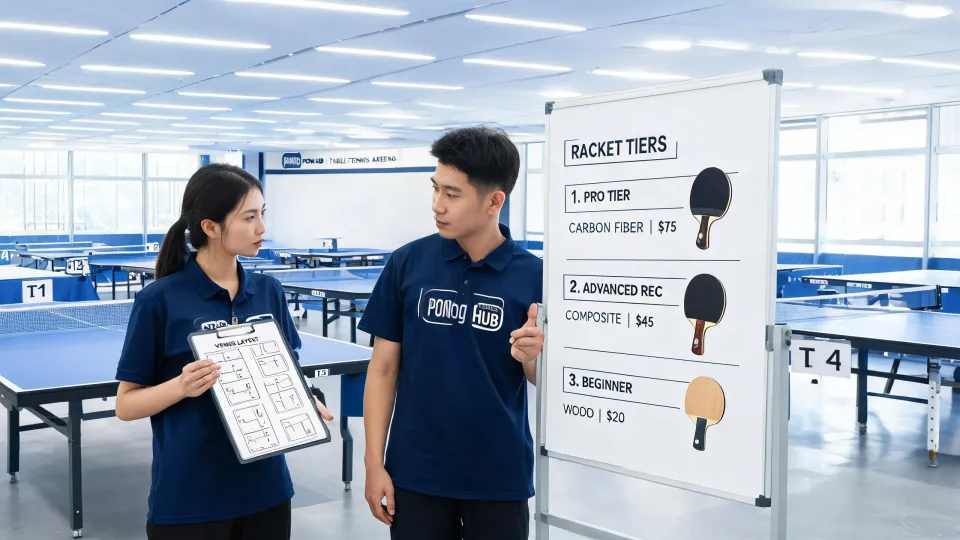
Now the paddles. The STIGA Pro Carbon ping pong paddle kept coming up in my research, and honestly, it's popular for a reason.
From the outside, a paddle is a paddle. The reality is different. The Pro Carbon has a carbon layer that adds a springiness to shots—better for players who want speed without losing control. For a rec room where you get everyone from total beginners to a legit former club player (shout out to our finance manager), that balance matters. We bought eight at around $35-45 each, and they've held up better than expected. The rubber is still gripping well after three months of daily use.
What I'd tell another admin: don't buy the cheapest paddle just to save $15. We did that first—a 4-pack of no-name paddles for about $20. The rubber started peeling within three weeks. Replacing them with the STIGA paddles cost $80 more than we would have spent upfront. Saved $15, spent $80. (ugh, classic.)
The Fitness Corner: A Leg Press Lesson
Table tennis was the easy section. The fitness corner was where I nearly made a fool of myself.
The operations director wanted a couple of strength machines near the rec room. We had space for exactly one. After talking to people who actually lift, the consensus was a seated leg press.
Here's the thing I didn't know: leg press position matters a lot. The placement of your feet on the platform changes which muscles do the work. Higher foot placement targets glutes and hamstrings; lower placement shifts focus to the quads. I assumed you just sat down and pushed. I was wrong.
We bought a machine with printed instructions, but don't assume people will read them. We laminated a simple cheat sheet showing the two or three common foot positions and what each one works. That single piece of laminated paper drew more positive comments than anything else in the room (thankfully).
The Speaker: Because Rec Rooms Need Music
The budget didn't call for a built-in audio system, but a rec room without music feels dead. So I started looking at portable options.
I went down a rabbit hole on the loudest portable bluetooth speaker. It's a weirdly contested product category—every manufacturer measures "loud" differently, and spec sheets don't always tell the truth. We tested two side-by-side over a lunch break: a $250 model and an $180 one. The cheaper one sounded great at mid-volume but distorted at max. The pricier one stayed clean at high volume and had better battery life. We went with the pricier one because the room is near the accounting team, and the cleaner the sound at moderate volume, the fewer complaints I'd have to field.
The Card Game: Tunk, Apparently
Finally, the lounge area. I ordered standard card decks and a set of chips. The employees requested tunk. I had never heard of it.
Apparently, how to play tunk card game is something everyone in our dispatch department knows except me. It's a variation of gin rummy especially popular in the Southeast—which is where a chunk of our warehouse team is from. I learned just enough to know that tunk uses a standard 52-card deck (or two decks when you have more than five players) and that scoring revolves around matching and discarding. If your team is from that region, tunk will get requested. Order extra decks; they disappear fast.
What I'd Do Differently
Looking back, the rec room was a success. It's used every single day, and I've seen a real shift in where people take their breaks. But there are three things I'd tell any admin about to take on a project like this.
First, verify invoicing and shipping capability before you commit to any vendor. I learned that the hard way in 2022, when a vendor couldn't provide proper invoices and I ate $2,400 in rejected expenses. This time, I checked every vendor's invoicing setup first—it saved me a headache.
Second, buy recreation items slightly better than you think you need. The STIGA Pro Carbon paddles, the table upgrade, the better speaker—every one of those "do we really need this?" calls proved worth it. Employee-facing equipment that breaks or feels cheap signals that the company doesn't care. That's not a cost-saving moment.
Third, don't try to be an expert in everything. I'm not a fitness professional, an audiophile, or a card game enthusiast. I'm an administrator who asked good questions, consulted people who knew more than I did, and made educated guesses with a budget. That's the actual job.
In my opinion, the total cost of a rec room isn't just the equipment—it's the research time, the missteps, the reorders. Knowing that upfront makes the decisions easier. And if you get to set one up, the STIGA table tennis table in the middle is the best $600 you'll spend. Just verify the current price first.